“Go and Make Disciples”: How Student Leadership is Transforming Michigan State University
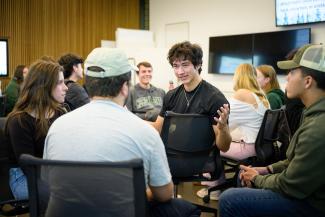
Tsen from Michigan State University remembers the day he committed his life to Jesus: February 10, 2025. After months of avidly listening to podcasts and reading books by philosophers, apologists, atheists, and other deep thinkers, Tsen didn’t know yet if he was ready to decide what he believed. He did know though that he found the Christian worldview the most compelling.
“I looked at other perspectives, but the one that made the most logical sense and resonated with me was Christianity,” he said.
However, when his friend messaged him and asked him if he had made a decision, Tsen hesitated. He wondered if there was more he needed to learn before making a commitment.
His friend disagreed. In an act of boldness, Tsen’s friend told him to get off the fence and put his faith in Christ. Those words were enough to push Tsen to action.
“I [realized] I could stay on the fringes forever. But to understand what Christianity is, who Christ is, I think I need to immerse myself,” Tsen said. “I’m going to put my faith in Christ. I’m going to go all in.”
Tsen may not have become a Christian if it weren’t for the bold leadership of his friend. Now, he’s deeply involved in InterVarsity, passionate about his faith, and ready to share it with others.
InterVarsity at Michigan State is showing students like Tsen that anyone can have the potential to be a leader — even those who might be unexpected. Through the ways they’re raising up leaders, students’ lives are transforming.
Leadership is Growth
Despite being a new Christian, Tsen’s decision to attend How Christians Lead, MSU InterVarsity’s leadership training program, was an easy one.
“I am starving and am always hungry for Christ. Whenever there is an opportunity to serve, an opportunity to learn, an opportunity to do something more, I can’t think of a time I’ve said no,” he said.
Every Friday for four weeks, he joined others to learn about spiritual disciplines, practice how to share his testimony, and be witnesses for Jesus.
To end the training program, students were sent out to prayer walk the campus. For Tsen, this meant getting out of his comfort zone. However, remembering that he wanted to go all in, he accepted the challenge.
“If our faith isn’t challenged, then we won’t grow,” Tsen said.
When Tsen and his prayer partner went out, they decided to do something even bolder: they approached students on campus and asked if they could pray for them. To their surprise, they discovered that students, both Christian and non-Christian, were open to being prayed for!

Tsen and partner pray over a student on their prayer walk
Leadership is Small but Impactful
For Gracie, leadership was as simple as showing up each week to invest in who the Lord brought her.
While Gracie attended How Christians Lead, she had big aspirations for what her first Bible study would be like. She imagined a large, talkative group and a revival in her dorm.
But when only three shy students showed up, attending inconsistently and participating even less, Gracie wrestled with her discouragement.
“What am I doing wrong that people don’t want to come?” she wondered.
Instead of wallowing in her disappointment, Gracie chose to encourage those three students to attend every week and created a space where they felt safe enough to participate. As she did this, her perspective on leadership changed.
“I realized over time that was the perfect environment for the group we had coming,” Gracie said. “They were shy, and in a larger group setting, they wouldn’t have been able to open up. They needed that space, even if it wasn’t what I was expecting initially.”
By the end of that year, Gracie’s Bible study, while small, was full of deep conversations and laughter. The students involved didn’t feel overlooked but instead had a close community they could rely on.
“I saw how to lay aside my expectations and trust that God’s provision –– who he introduces us to and opportunities that he does give us –– might not be what we expect, but it’s always the perfect amount.”
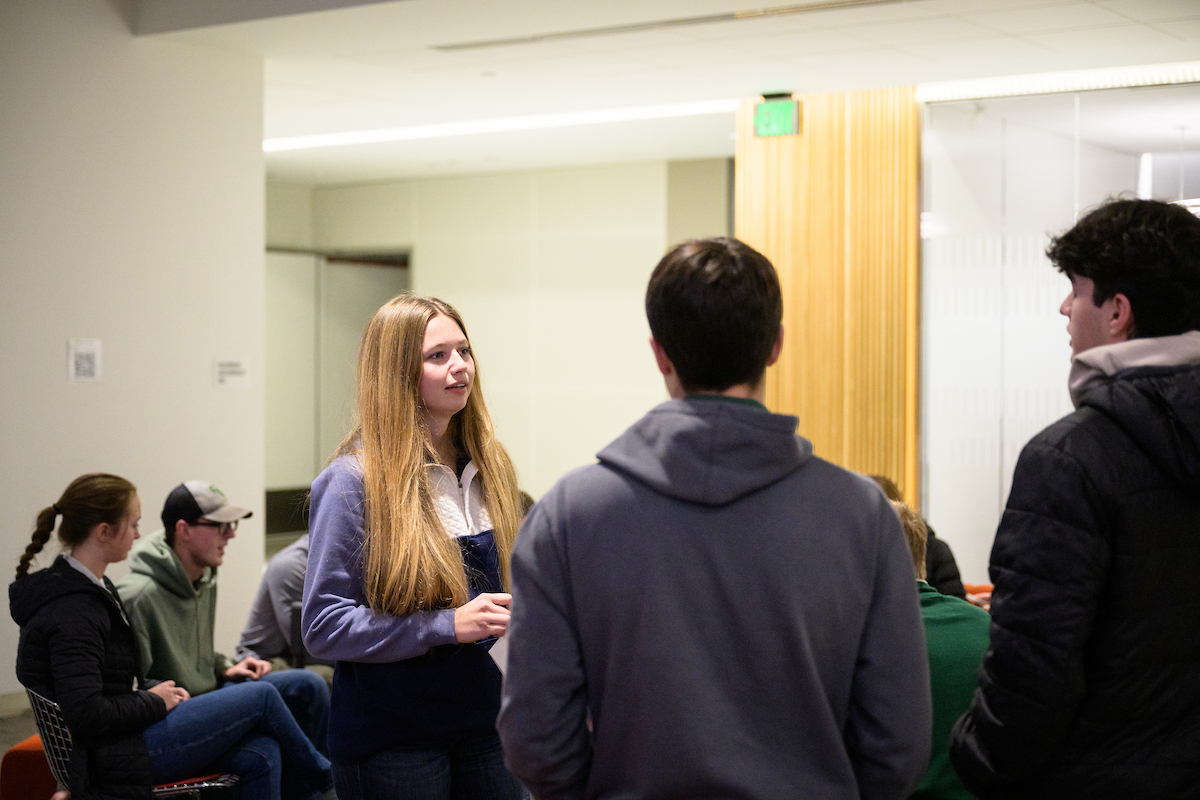
Gracie, after attending a friend’s Bible study, follows up with two members to make sure they’re plugged in
Leadership is Being a Servant
Before InterVarsity, A’Lvinia thought leaders had to be “talk in front of people” kinds of students, and that leadership was something people pursued out of selfishness.
“I thought of leadership like an oppressive force. Because when you hear ‘leader,’ you hear ‘follower,’” she said.
Through discipleship and How Christians Lead, A’Lvinia’s view on leadership began to change. She learned that leadership wasn’t about power, but instead was about laying yourself down to serve others. She realized leading was something she could do after all.
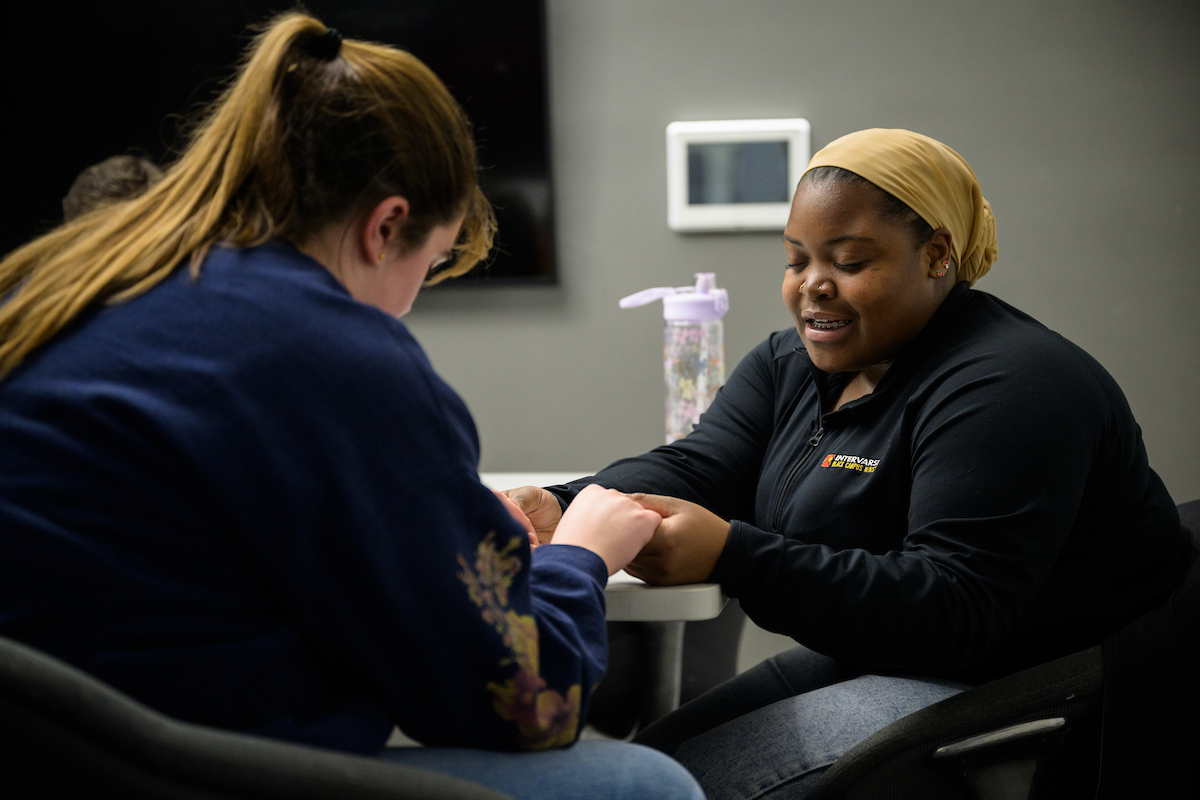
A’Lvinia prays with a partner at How Christians Lead
"[Leadership] can be about being a servant leader, someone who just helps someone,” A’Lvinia said.
Now, A’Lvinia is the president of MSU’s Black Campus Ministry chapter, a position she holds with great humility.
“I'm a leader, but I'm going to help you [new students] grow into leadership,” she said. “I'm going to give you everything you need to be successful, and then you can do that for the next person.”
Leadership is Healing
God works through student leaders and those they serve, but he doesn’t stop there –– he also brings healing to the campus.
Michigan State is a big school, but Brad, an InterVarsity campus staff, still sees a huge need for community on campus and leaders to nurture it. “There’s people on a campus of 50,000 that feel alone, and that’s heartbreaking,” he said. “We want to be a ministry that’s drawing people out of that and creating connection so people can feel known by others and ultimately feel known by God.”
A few years ago, there was a shooting at MSU. Amid the fear, InterVarsity student leaders stepped in to serve. They messaged out breath prayers that people could pray as they hid in different parts of campus.
“I think that was really impactful for a lot of people who didn’t know how to respond,” Brad said. “Students felt like their InterVarsity community was a safe space in the midst of a campus that felt pretty unsafe.”
Brad still tears up when he thinks about this, and he believes what happened then shaped the culture of campus even today.
“We get to be a part of people’s healing,” he said. “As we send people out to campus and into the world, we create a place that looks more and more like God’s kingdom.”
Leadership is for Everyone
“When Jesus talks about ‘go and make disciples,’ that’s leadership. It’s not something big and scary, it’s not extravagant, it’s not standing on a stage talking to 300 people. Leadership is meeting with someone for coffee and having a conversation and sharing the Gospel, pointing people towards the truth,” Gracie said.
For Gracie, leadership looked like creating a space for just three shy students to feel like they had others to confide in. For Tsen, leadership looked like challenging himself to learn, grow, and try new things. For A’Lvinia, leadership looked like becoming a servant and equipping others to do the same.
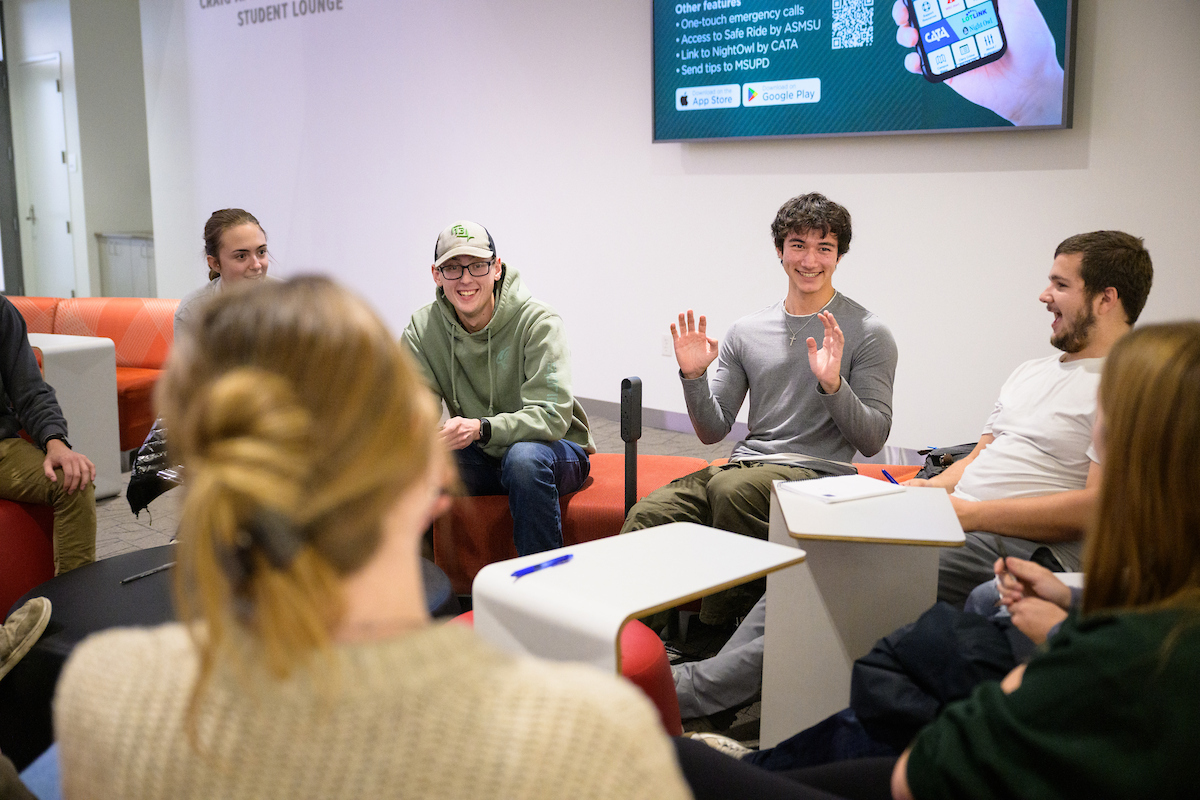
Tsen leads a Bible study icebreaker as a way of trying on leadership
And this, ultimately, is why student leadership is core to InterVarsity at Michigan State’s ministry and to InterVarsity as a whole. When students are trained as leaders, they not only make a difference in the lives of others, but God transforms their lives as well.
“We want to develop people who want to see Jesus’ kingdom breakthrough in every part of our world,” Brad says. “We’re sending engineers, nurses, businesspeople… we want to develop leaders who [influence] places to reflect more and more of God’s kingdom and exemplify Jesus’ love. The students who grow the most through their InterVarsity experience are the students who choose to lead.”

Related Content

Through the BCM chapter at Michigan State, students can explore faith, unafraid of judgment or misunderstandings. They don’t have to choose between being Black and Christian –– they can celebrate both.
Related Content

Neil, now an alumnus of the University of Texas at Austin, encountered InterVarsity not through an invitation, a roommate, or a table, but from a humble flyer.