Campus Preachers: Yea or Nay?
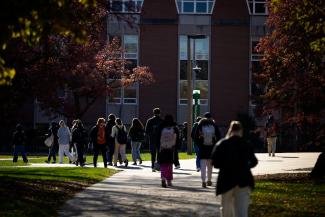
The scene is all too familiar to today’s college students.
On the way to class, you come across a huge crowd and wonder what's going on. In the middle of the crowd, you see someone. Not a student, but someone older. They’re holding a sign and a microphone, and they’re discussing topics like hell or sexuality. Students are arguing with them, laughing, or trying to ignore them. You’re a Christian, and you don’t know what to do…
For some, campus preachers present bold gospel witness. For others, they raise concerns about what it means to effectively share the gospel on campus. Not all campus preachers are harmful, and some even create opportunities for meaningful dialogue. However, because some of the more confrontational ones can be the loudest expression of Christianity on campus, their approach may leave Christian students hesitant to share their faith with classmates.
But is all campus street preaching bad, or are there ways in which this method of sharing the gospel can actually lead to spiritual fruit on campus?
Who Are Campus Preachers?
Open-air preaching isn’t new. Some would argue its origins trace back to Jesus and the apostles — The Sermon on the Mount, Peter in Jerusalem, Paul speaking publicly in Athens, and John the Baptist in the wilderness. Church history continued this tradition through preachers like George Whitefield and John Wesley.
These days, campus preachers like Sister Cindy or Vijay Pisini, are connected to groups called, “Campus Ministry USA” and “Obedience of Faith.” Others, like Tom Rayborn or Brother Matt operate independently or are supported by their own local church. They’re not part of a single centralized movement and aren’t affiliated with the campuses they visit.
Why Are They on Campus?
Like InterVarsity, campus preachers recognize that college students are especially open to conversations about big life questions during this formative season. They know students are curious about purpose, religion, and identity, and are more motivated to find answers than they might ever be.
Many universities also strongly uphold free speech protections, and preachers can easily gain permits to be on campus, even when some students consider their speech harmful.
“At first, I despised campus street preachers because many of [them] are very confrontational with their preaching tactics. [As] a student who was raised Roman Catholic, I didn’t appreciate how most of these campus street preachers intend to be very anti-Catholic,” Jose, a student at California State University Long Beach, said. “However, I came to a realization that, as much as I despised their anti-Catholic preaching, they have the right to be on campus.”
This does not mean universities have no policies around free speech. Speakers are still required to follow guidelines regarding where and how they can speak. Schools like the University of South Florida, for example, do not allow public speakers to use amplified sound on campus.
What’s Their Impact?
“I think the reason most students dislike campus preachers is because of their approach,” Vivienne, an InterVarsity student at Michigan State University, said. “At least on our campus, the preachers can be belligerent or contentious, which draws in the wrong crowd to talk to them.”
The issue for a lot of Christian college students isn’t whether these preachers should be allowed on campus, but why they choose to be on campus when their methods don’t seem effective.
“I don’t think [they] ever accomplish what [they] intend to,” Rajeev, an InterVarsity alumnus from Virginia Commonwealth University, said.
Some preachers associated with Campus Ministry USA have admitted to intentionally using provocative buzzwords to create a spectacle on campus. Because of this, students — even Christian ones — rarely see them as credible spiritual voices. These preachers say their goal is to bring students to Jesus, but students across religious and nonreligious backgrounds find their style off-putting.
“I walk the other way from anyone shouting at people,” Bethany, an InterVarsity alumna, said. “I will engage with people who are conversing with people. Big difference.”
Another student, Megan, who is involved with InterVarsity at Arizona State University said, “It seems that street preachers use scare tactics to get people to believe in Jesus, but is that really getting people to believe? Every time I’ve passed by with non-believing friends (or even my family back home), they seem annoyed and try and ignore them. So overall, they seem pointless and unloving to nonbelievers.”
As InterVarsity guides students in how to engage or not engage campus preachers, we remind them that there is always room for humility, recognizing that no one gets public witness right every time. Additionally, just like anyone we might disagree with, these street preachers are deserving of dignity and Jesus’ love.
“[Go into these conversations] with a firm Imago Dei mentality that whoever you’re talking to, regardless of their beliefs, is made in the image of God and is loved beyond imagination by him,” Sarah, an InterVarsity alumna from Southern Utah University, said.
Are They All the Same?
“The way of Jesus was not loud, it wasn’t condemning, it wasn’t aggressive. It was charity, love, acceptance, and communion with one another in solitude,” Rajeev said.
This is closer to the approach that apologists like Cliffe Knechtle use. Cliffe formerly worked with InterVarsity and still partners with some of our chapters while he travels to campuses independently. Instead of opting for aggressive or condemning language, Cliffe creates opportunities for honest conversation on campus. Many students embrace his Q&A-style sessions and willingness to admit uncertainty, saying “I do not know” when he lacks an answer.
This year at Montclair State University, Cliffe spoke at an InterVarsity event where students could openly ask about Christianity in a safe and respectful space. During the event, he said, “We are all created to reflect God’s character, God’s goodness. That is why we are valuable.”
This sentiment differs largely from other campus preachers. And clearly, it resonates. InterVarsity chapters and students leave comments on social media requesting Cliffe to visit their campus next.
The Need for Relational Evangelism
College campuses will continue to be one of the few places where public spiritual conversations regularly happen. InterVarsity considers these conversations most effective when they are marked by honesty, understanding, and deep relational care.
Rajeev remembers how impactful that kind of relational ministry was in his InterVarsity chapter: “Our outreach was far more effective in being invitational to things like basketball, kickball, pizza, board games, etc. than it was holding canvassing events on the campus quad. By showing people the way of Jesus rather than trying to convince them of it, we actually had a more thriving ministry.”
Megan also affirms Gen Z’s need for relational outreach when discussing what she wished students knew about Jesus that they might not hear from a campus preacher: “God is full of grace and loves everyone. He wants a relationship with you.”
While some students may be wary of campus preachers, one thing is certain: Regardless of method, any open spiritual discussion on campus can lead students to explore questions about religion, faith, and Jesus. Ministries like InterVarsity can then be there, offering space for them to wrestle with these questions in Bible studies or in meaningful friendships where conversations about the gospel continue far beyond the campus lawn.
To be part of ensuring these spaces exist, click here to see how you can get involved with InterVarsity’s ministry on campus.

Related Content

"I've described myself as an atheist for as long as I can remember," Brian said. "But now, I'd say I'm more agnostic." Brian and I have been talking about faith since we were roommates in college.